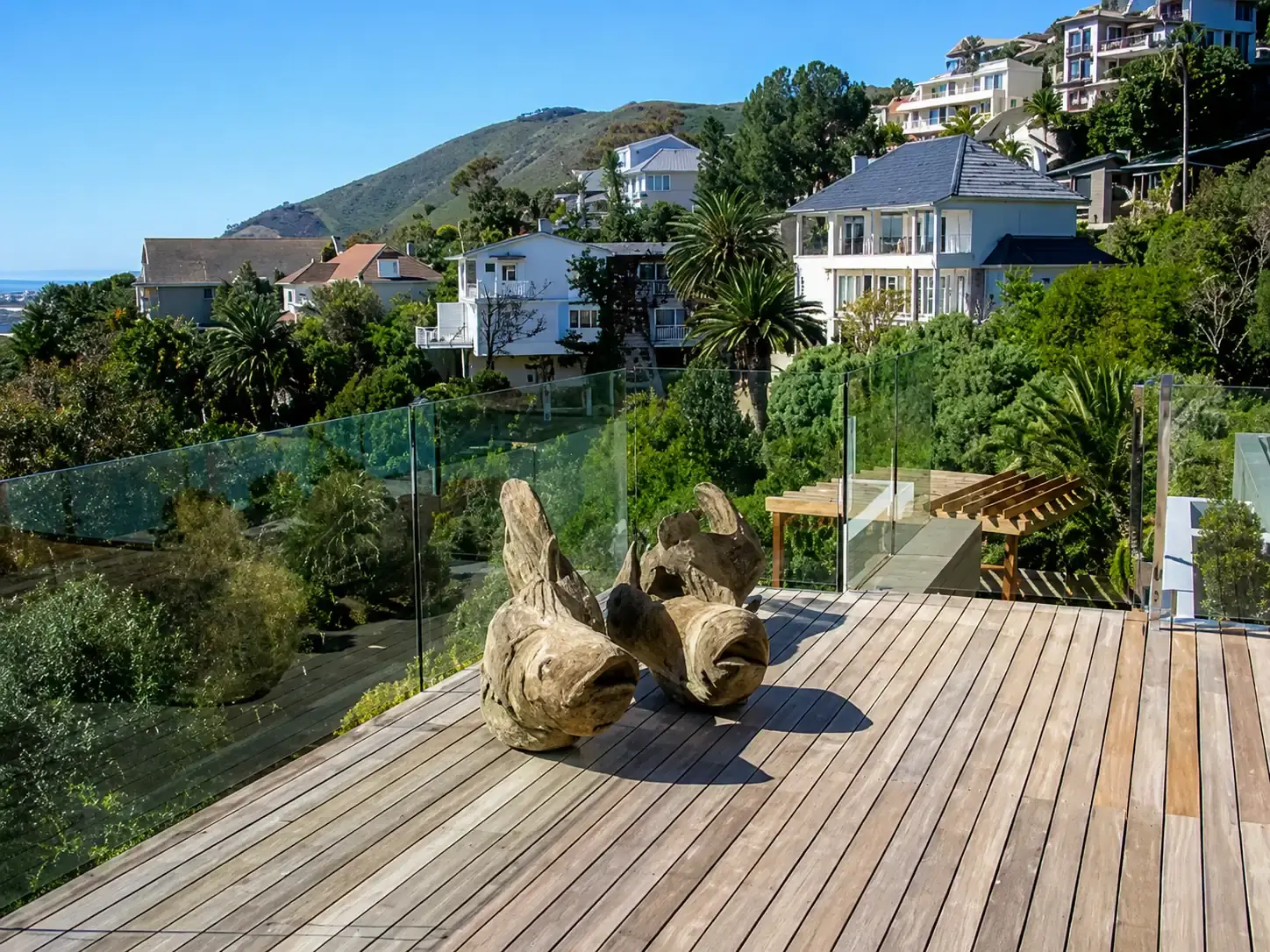
The glass specification matters
Not all glass used in balustrades performs equally in coastal conditions. Toughened safety glass is a minimum requirement; laminated toughened glass is the stronger specification for exposed positions, because if a panel fails it holds together rather than shattering. Panel thickness, edge treatment and the quality of any interlayer all affect long-term performance and safety.
Salt deposits and mineral staining can etch unprotected glass over time. Specifying the right glass treatment and establishing a cleaning routine appropriate to the exposure are decisions that should be made before installation, not after the surface shows staining that is difficult to reverse.
The fixing system is where failures happen
A frameless glass balustrade is only as robust as its structural fixing. In a coastal setting, any ferrous metal in the fixing system — bolts, brackets, base plates — will corrode if it is not adequately protected or specified in the right material grade. Grade 316 stainless steel fixings are standard for exposed positions. Lesser grades, or mild steel components that have been painted rather than replaced, are a common source of problems in systems installed by generalist contractors.
The channel or spigot system that holds the glass also needs to be specified for drainage. Water that collects in a channel without a clear path to drain will accelerate corrosion and create staining on the glass above it.
Installation and ongoing maintenance
A frameless glass balustrade on an ocean-facing balcony will need cleaning more frequently than one in a sheltered inland courtyard. Salt film accumulates on glass surfaces and, if left, begins to bond. Periodic washing — not just rinsing — keeps the panels clear and reduces the rate of mineral build-up.
The structural fixing points should be inspected periodically as part of any property maintenance programme. Catching early signs of surface corrosion on fixings, or movement in a spigot, is far less costly than addressing a compromised system after damage has occurred. The right fabricator will advise on what to look for and how often.
Have a project in mind?
Start a conversation